
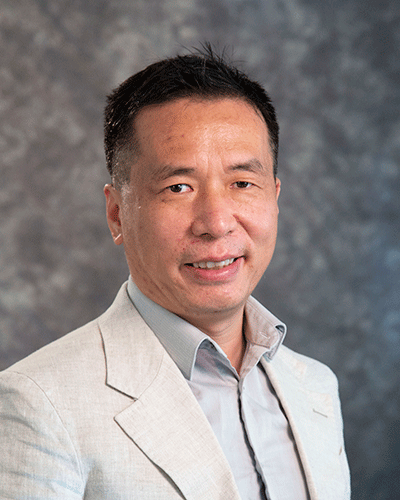
Duke Pathology is pleased to welcome Zhaohui Wang, PhD, who has transitioned from an adjunct faculty appointment to a full-time faculty position as an assistant professor in Pathology. In conjunction with his appointment, Wang is establishing a new laboratory focused on developing innovative human disease models and therapeutic discovery platforms that bridge fundamental research and clinical translation.
Wang received his PhD in biochemistry and molecular biology from the Beijing Institute of Genomics, Chinese Academy of Sciences in Beijing. Throughout his career, he has built expertise in cancer biology, functional cancer genomics, precision medicine, organoid technologies, and translational therapeutics.
Before launching his laboratory at Duke, Wang served as an assistant professor and director of Precision Medicine at the Terasaki Institute for Biomedical Innovation in Los Angeles, where his laboratory focused on organoid engineering, precision medicine, and therapeutic discovery. Earlier in his career, he served as executive director of the Woo Center for Big Data and Precision Health at Duke University and later joined Xilis, Inc., a Duke spin-off company, as head of Early Research and Partnership Support.
Wang's connection to Duke began during his postdoctoral training with Dr. Hai Yan, where he investigated the molecular mechanisms driving brain tumors. His research contributed to understanding the role of telomerase reverse transcriptase (TERT) promoter mutations and protein phosphatase 1D enzyme (PPM1D) alterations in glioma. His return to Duke reunites his experience in cancer biology, organoid engineering, precision medicine, and technology development as he builds a multidisciplinary translational research program.
Advancing Disease Modeling and Therapeutic Discovery
The Wang Laboratory develops human disease models and discovery platforms designed to improve understanding of disease biology and accelerate the development of new therapeutic strategies. Research efforts are organized around three integrated areas:
Human Disease Models
Development of patient-derived and stem-cell-derived organoids, as well as organ-on-chip systems, to more accurately replicate human disease biology and therapeutic responses.
AI for Biology and Therapeutic Discovery
Integration of artificial intelligence and machine learning with high-content imaging, single-cell and spatial multi-omics technologies, and functional perturbation approaches to identify disease mechanisms and potential therapeutic vulnerabilities.
Therapeutic Translation
Development and evaluation of emerging treatment strategies, including antibody-drug conjugates (ADCs), targeted therapies, cell therapies, and rational drug combinations.
The laboratory's initial research efforts will focus on brain tumors, prostate cancer, and breast cancer, with an emphasis on creating clinically relevant human disease models and scalable platforms for therapeutic discovery.
Nationally Recognized Research
Wang's work has been supported by several competitive awards and grants, including an American Brain Tumor Association Basic Research Fellowship, an American Association for Cancer Research (AACR)-Novocure Career Development Award, and California Institute for Regenerative Medicine (CIRM) DISC0 and TRAN2 awards.
His research portfolio includes studies of TERT promoter mutations and IDH-mutant glioma, therapeutic targeting of oncogenic PPM1D mutations in diffuse intrinsic pontine glioma, and the development of micro-organosphere technology for high-throughput organoid culture and rapid functional testing of patient tumors. His work also extends to breast cancer and the development and evaluation of emerging therapeutics, including ADCs, using patient-derived organoid models.
"I am very excited and grateful for the opportunity to return to Duke and establish my laboratory here," said Wang. "We hope to bring together human disease models, engineering, artificial intelligence, and cancer biology to develop new approaches for studying disease and discovering potential therapies. I especially look forward to collaborating with colleagues across Duke and, ultimately, translating our research into meaningful benefits for patients."
As the laboratory takes shape, Wang plans to foster collaborations across Duke's clinical, scientific, and engineering communities to advance precision medicine and accelerate the translation of discoveries into improved patient care.