
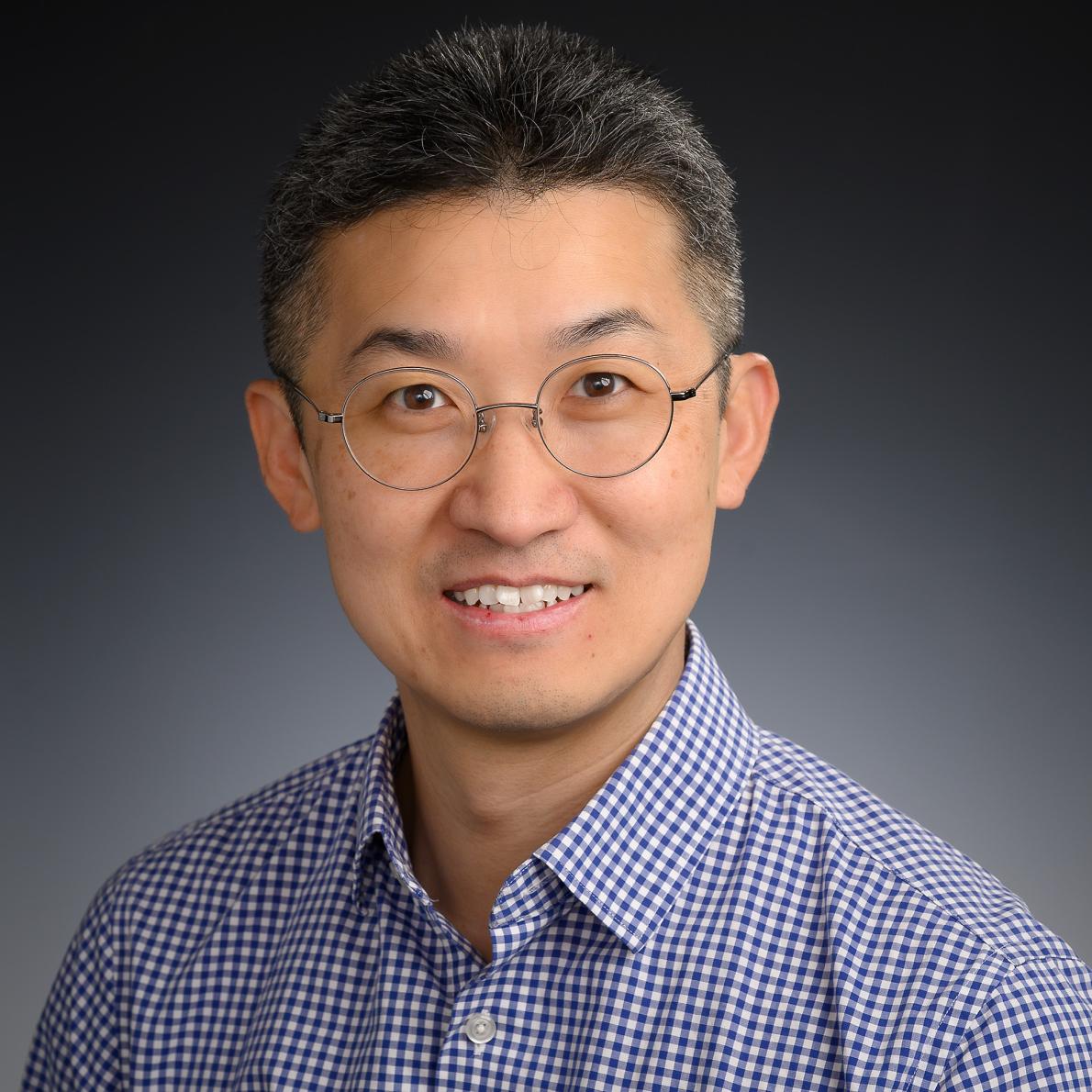
Duke Rollie Endowed Assistant Professor of Pathology Jung Wook Park, PhD, presented research on treatment resistance in prostate cancer at the Molecular Medicine Seminar hosted by the University of Texas Health in San Antonio, Texas, held from April 28-28, 2026.
Park’s talk, titled “From Human Primary Cells to Cancer: Cellular Plasticity and Target Discovery,” was delivered in collaboration with colleagues from UT Health San Antonio:
- Jihoon Lee, PhD, Assistant Professor, Department of Molecular Medicine
- Lingtao Jin, PhD, Associate Professor, Department of Molecular Medicine
- Chia-Nung Hung, PhD, Assistant Professor/Research, Department of Molecular Medicine
- Karthigayan Shanmugasundaram, PhD, Assistant Professor/Research, Department of Molecular Medicine
In the talk, he introduced what prostate cancer is and how it develops. While most prostate cancers grow slowly and respond well to treatment at first, some can change over time and become more difficult to treat. The central focus of the presentation was on how prostate cancer evolves in response to therapy. Many treatments work by blocking male hormones (androgens), which fuel prostate cancer growth. However, some cancer cells can adapt to survive without these signals, leading to treatment resistance. This ability to change, or cellular plasticity, allows tumors to persist and progress despite therapy.
By studying the biological changes that enable cancer cells to adapt and survive, Park and his collaborators hope to identify new ways to prevent cancer from becoming more aggressive by slowing the emergence of treatment resistance. Their research highlights the importance of identifying early warning signs that cancer cells are beginning to adapt.
The research team at the Park Laboratory also identified two promising molecular targets, NPTX1 and HDAC6, which may play key roles in the growth and transformation of treatment-resistant prostate cancer. Targeting these molecules could help disrupt the cancer’s ability to adapt, potentially leading to more effective therapies and offering hope to patients with advanced disease.