
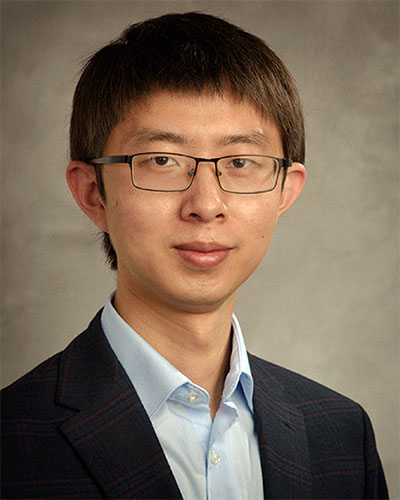
Duke Pathology congratulates Furong Huang, PhD, senior research associate in the laboratory of Jiaoti Huang, MD, PhD, Johnston-West Endowed Chair of Pathology, on receiving a prestigious K99/R00 Pathway to Independence Award from the National Cancer Institute (NCI).
Awarded on Sept. 14, 2026, the highly competitive K99/R00 program supports outstanding postdoctoral researchers as they complete mentored training and transition to independent, tenure-track faculty positions. The award is designed to accelerate the development of promising investigators into future leaders in biomedical research.
Huang's funded project, "Programmable RNA Engineering to Target Integrator-Mediated Noncanonical RNA Processing in Neuroendocrine Prostate Cancer," seeks to advance understanding of one of the most aggressive and treatment-resistant forms of prostate cancer. Under the mentorship of Jiaoti Huang, MD, PhD, and co-mentorship of Wei Li, PhD, at the University of California, Irvine, and Eric J. Wagner, PhD, at the University of Rochester Medical Center, Huang will investigate how abnormal RNA processing contributes to the development and progression of neuroendocrine prostate cancer.
His research focuses on the Integrator complex, a key regulator of RNA biology that has emerged as an important driver of cancer progression through noncanonical RNA processing mechanisms. Using innovative CRISPR/Cas13-based RNA engineering platforms, Huang will identify disease-promoting RNA alterations and explore new approaches to therapeutically target them.
The work aims to uncover novel molecular mechanisms underlying advanced prostate cancer while laying the foundation for RNA-based therapies that could provide new treatment options for patients whose cancers are resistant to conventional approaches.
"This award recognizes Dr. Huang's exceptional scientific creativity and the potential impact of his research," said Jiaoti Huang. "His work addresses a critical unmet need in prostate cancer research and exemplifies the innovative science being pursued at Duke Pathology."